Geometry Dash is a rhythm-based platformer that tests your reflexes, timing, and patience. With levels ranging from casual fun to soul-crushing difficulty, there is always a new challenge waiting. This guide will help you improve your skills and conquer even the toughest levels.
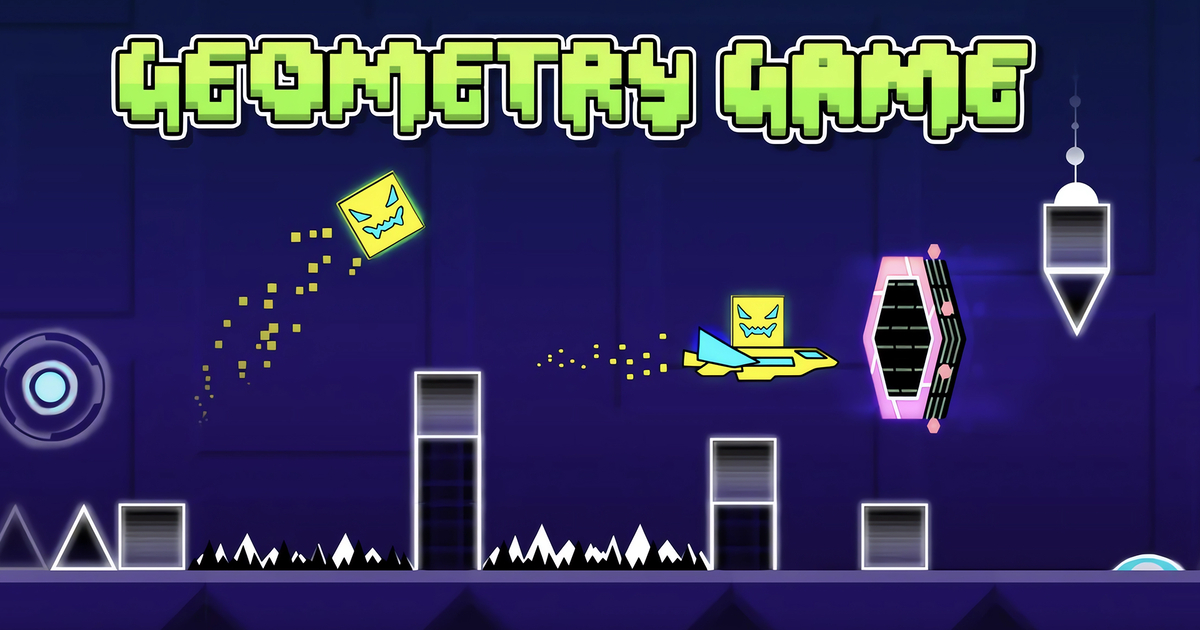
Getting Started: The Basics
Before diving into advanced techniques, make sure you have mastered the fundamental mechanics.
Core Controls
| Action | Input | When to Use |
|---|---|---|
| Jump | Click / Tap / Space / Up | Default mode - jump over obstacles |
| Hold to fly | Hold click / Hold space | Ship mode - navigate up and down |
| Gravity flip | Click / Tap | Ball mode - switch gravity direction |
| Size change | Automatic | Portal effects - mini mode is harder |
Game Modes Explained
- Cube: The classic mode. Tap to jump. Timing is everything.
- Ship: Hold to go up, release to go down. Smooth movements are key.
- Ball: Tap to flip gravity. This mode requires precise rhythm sense.
- UFO: Tap to jump in mid-air. Each tap gives a small boost.
- Wave: Hold to move up, release to go down, but with tight control.
- Robot: Hold to charge a big jump. Release at the right moment.
- Spider: Tap to teleport up or down. Fast-paced mode with lots of action.
The Rhythm Connection
Geometry Dash is fundamentally a rhythm game. The obstacles are placed to match the beat of the music.
How to Use Music to Your Advantage
Listen Before You Play: Play the level in practice mode first and just listen to the music. Try to count the beats and notice when major changes happen.
Beat Counting: Most levels follow a 4/4 time signature. Count "1-2-3-4" in your head as you play. Obstacles usually appear on beat 1 or beat 3.
Musical Cues: Pay attention to drops, builds, and breakdowns in the music. These sections often correspond to difficulty changes in the level.
Rhythm Training Exercises
- Tap Along: Play a level and just tap along with the beat without worrying about dying. Focus on feeling the rhythm.
- Slow It Down: If available, use practice mode with speed reduction. Playing at 75% speed helps you understand patterns.
- Count Aloud: Say "jump" or count beats out loud. This engages more of your brain and improves timing.
Level Learning Strategies
The key to beating hard levels is memorization. You need to know exactly what is coming next.
The Section Method
Break the level into sections and master one at a time:
- Section 1 (0-20%): The introduction. Usually easier, use it to warm up.
- Section 2 (20-50%): The build-up. Difficulty increases, new patterns appear.
- Section 3 (50-80%): The drop. This is usually the hardest part.
- Section 4 (80-100%): The finale. Often easier but don't get complacent!
Practice Mode Techniques
Start Positions: Use practice mode to jump to specific sections you are struggling with. Don't waste time playing through easy parts just to practice a hard section.
Checkpoint Strategy: Place checkpoints before difficult patterns. Practice each pattern individually, then connect them together.
Mirror Practice: If a pattern is confusing, try watching someone else play it first. Seeing the pattern from an external perspective helps your brain understand it.
Common Patterns and How to Beat Them
Spikes
The most basic obstacle. Spikes come in various formations:
- Single spike: Simple jump. Don't overthink it.
- Spike clusters: Jump at the right moment to clear all spikes at once.
- Spike stairs: Jump from spike to spike. Maintain consistent rhythm.
- Fake spikes: Some levels have decoration that looks like spikes. Learn to tell the difference.
Gravity Portals
These change your gravity direction. The key is to NOT panic:
- Blue portal: Normal gravity (you fall down)
- Yellow portal: Reverse gravity (you fall up)
- Always check which direction you will be falling after a portal
- Prepare your inputs for the new gravity direction BEFORE you enter the portal
Speed Changes
Speed portals change your movement speed:
- Slow: Easier to react but requires more precise timing
- Fast: Less reaction time but patterns are often simpler
- Reverse: Extremely rare - you move backward! Very disorienting
Size Changes
- Mini portal: You become smaller. Jumps feel different - more floaty
- Giant portal: You become larger. Hits feel bigger but jumps are heavier
- Always mentally adjust when you change size
Mental Game and Frustration Management
Geometry Dash is as much a mental game as a skill game. Frustration is your worst enemy.
The Frustration Cycle
- You start a level fresh and focused
- You die at a hard part multiple times
- You get frustrated and start rushing
- You start dying at easy parts too
- You get more frustrated
- You make even more mistakes
How to Break the Cycle
Take Breaks: If you die at the same spot 5 times in a row, take a 2-minute break. Stand up, stretch, drink water. Come back fresh.
Celebrate Progress: If you got farther than ever before, that is a win! Don't be upset about dying at 95% - be happy you got to 95%.
Change Your Focus: Instead of thinking "I need to beat this level," think "I need to get past this one part." Smaller goals are easier to achieve.
The Power of Consistency
Playing 10 minutes every day is better than playing 2 hours once a week. Your muscle memory and rhythm sense develop with consistent practice. Even short sessions help you improve.
Advanced Techniques
Straight Flying
In ship mode, straight flying means maintaining a level altitude. The trick is to tap in a steady rhythm, not hold continuously. Find the tap frequency that keeps you level.
Wave Spam
In wave mode, rapid small inputs let you navigate tight spaces. This is one of the hardest techniques but also one of the most impressive.
Click Buffering
You can click slightly before you need to jump and the game will register it when you hit the ground. This helps with tight timing.
Muscle Memory Building
The ultimate goal is to play on muscle memory. When you don't have to think about each jump, you can focus on what is coming next. This comes naturally with enough practice.
Setting Up for Success
Hardware Tips
- Mouse vs Keyboard: Find what works for you. Many top players use the spacebar, but some prefer mouse clicks.
- Refresh Rate: A higher refresh rate monitor makes the game feel smoother and can improve your reaction time.
- Audio Quality: Good headphones help you hear the music clearly, which improves your rhythm.
Posture and Health
- Sit up straight with good posture
- Keep your wrists relaxed to avoid strain
- Take regular breaks to rest your eyes and hands
- Stay hydrated - dehydration affects reaction time
Conclusion
Geometry Dash is a game of patience, rhythm, and persistence. Everyone struggles with hard levels - the difference between those who beat them and those who don't is simply that those who beat them kept trying. Start with easier levels to build fundamentals, work your way up, and remember to have fun along the way.
Ready to test your rhythm skills? Play Geometry Dash now.
For more skill-based game guides, check out our Vex 7 master guide and Slope high score guide.